.png)
If you’re a swim coach using data, there’s a good chance you’ve felt this before. You have access to more information than ever: stroke metrics, turns, underwaters, effort, volume, and intensity. But when it’s time to actually write a practice, you still pause and think:
What should we actually focus on next?
Not because the data isn’t valuable. But because there’s so much of it. Finding trends across an entire team. Spotting which skills are consistently holding swimmers back. Connecting patterns that matter for training takes time, and most coaches simply don’t have. And when everything looks important, nothing feels clear. What coaches really need isn’t more data. Its direction. That’s exactly why we built Team Priorities.
The Hidden Problem With “More Data”
Most performance tools do a good job of showing what happened. But coaching decisions aren’t made by looking at one swimmer, one metric, or one workout at a time. They’re made by understanding patterns:
-
Are underwaters a team-wide weakness, or just a few swimmers?
-
Is stroke rate improving, but propulsion lagging?
-
Are turns improving in practice, but not showing up consistently in racing?
Answering those questions manually means:
-
Clicking into swimmer profiles
-
Comparing metrics across strokes
-
Remembering what you saw last week
-
Trying to connect dots in your head
That’s where data overload creeps in, not because there’s too much information, but because there’s no clear way to turn it into training priorities.
What Coaches Actually Need
At the end of the day, coaching decisions don’t happen in dashboards. They happen on deck.
When you’re:
-
Writing workouts
-
Choosing drills
-
Deciding what technical theme to emphasize
-
Aligning assistant coaches on what matters most
In those moments, you don’t need to see everything. You need to know what matters most right now. Team Priorities was built to answer that question automatically.
Why Team-Wide Trends Matter More Than Individual Stats
Looking at individual swimmer data is useful, but it often hides the bigger picture.
For example:
-
A few swimmers might have excellent breakouts, masking a broader team issue
-
One strong freestyler can pull up a team average, even if most of the group struggles
-
Improvements in one stroke can distract from stagnation in another
Team Priorities solves this by surfacing team-wide trends — the skills your swimmers collectively struggle with most — so you can focus your training where it will have the biggest impact.
Instead of asking:
“Who needs help with this?”
You can confidently answer:
“This is something our whole team needs to work on.”
How Team Priorities Works (Without the Tech Speak)
Team Priorities analyzes everything your swimmers do, every stroke, every turn, every underwater across recent training. It then:
-
Looks for patterns across the entire team
-
Compares those patterns to swimmers of similar speed, height, and gender
-
Identifies the three skills where your team is falling behind the most
Those three skills become your Team Priorities the clearest, highest-impact places to focus your training. The key difference: You don’t have to go searching for them. They’re surfaced for you.
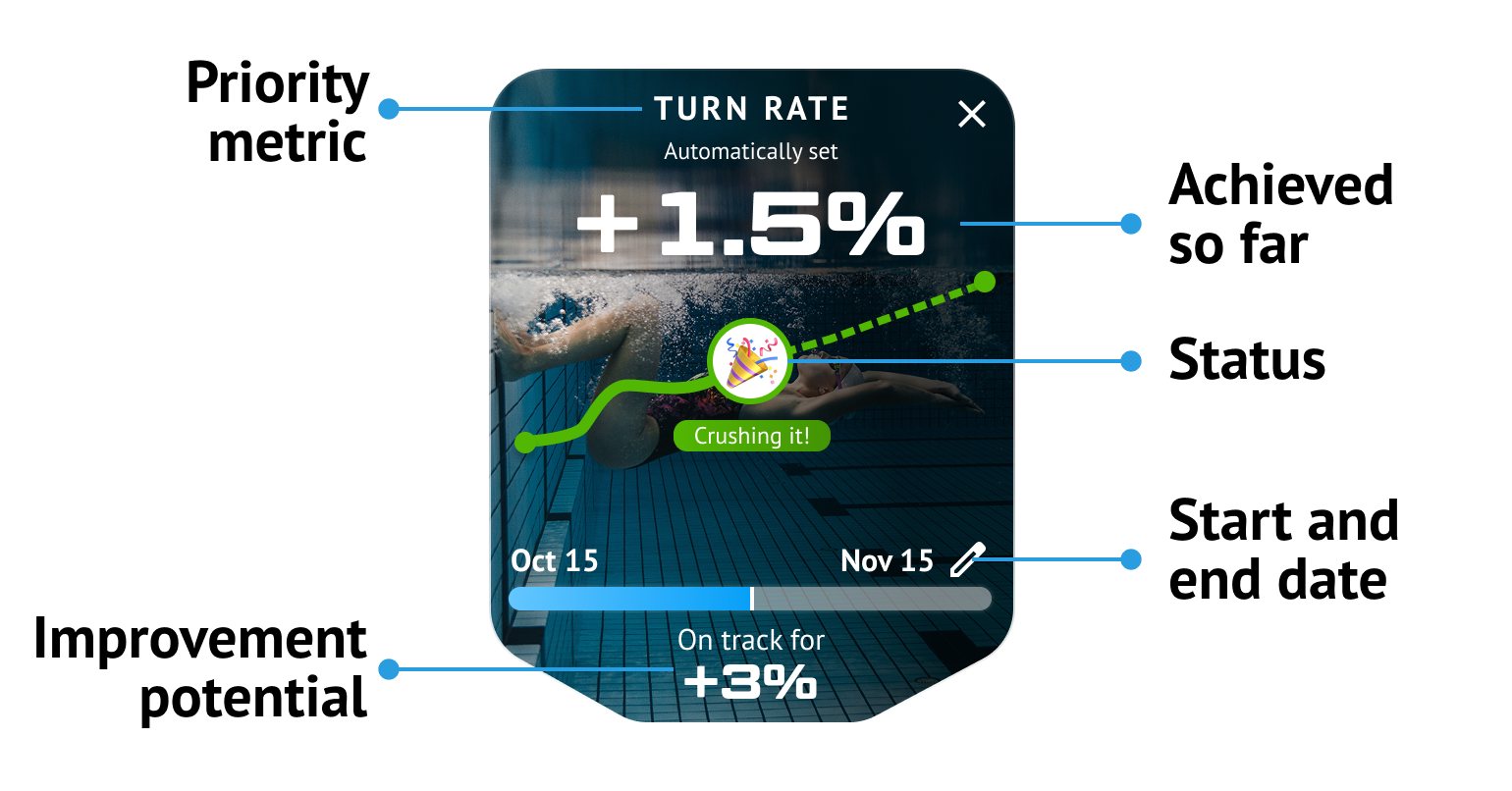
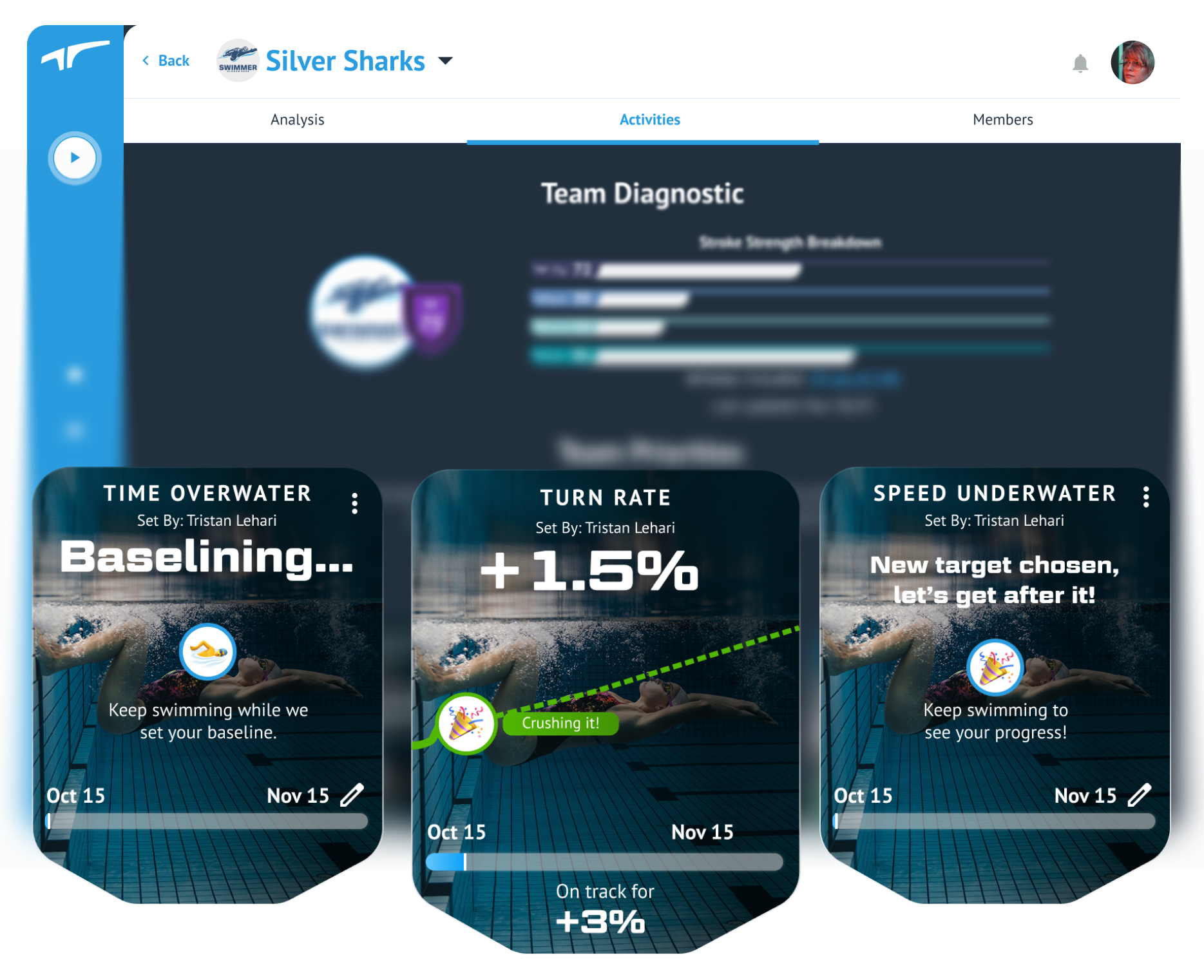
What you’re seeing above is exactly how Team Priorities is meant to be used.
Each priority highlights one clear focus area, shows how your team is trending, and gives you immediate context on progress, without needing to dig through dashboards or swimmer profiles.
From there, the question becomes simple: How do I coach this?
Each priority gives you a clear coaching target you can immediately use to shape your training, for example:
- If turn speed is lagging, you can build more speed in and out of the turns-heavy sets or isolate transitions
-
If underwater time is a priority, you might add more breakout-focused sets or controlled underwater limits
-
If stroke efficiency shows up, you may emphasize technical drills or tempo control
Instead of guessing what to emphasize, your Team Priorities guide:
-
What drills to include
-
What skills to reinforce
-
What technical themes to repeat
-
Where to focus team meetings and feedback
Just as importantly, Team Priorities helps you answer one of the hardest coaching questions:
Is this actually working? As your swimmers train, priorities update automatically, giving you quick feedback on whether the work is translating.
You can check at a glance:
-
Are these skills improving?
-
Is the team responding to the work?
-
Do we need to adjust focus or keep pushing?
That feedback loop helps you coach with confidence, not just intuition.
When Coaches Want Control
Automation doesn’t replace coaching; it supports it.
If you already know what you want to focus on, you can:
-
Select your own metrics
-
Build custom priorities
-
Adjust focus anytime as your season evolves
The result is a system that works with you:
-
Guidance when you want it
-
Freedom when you need it
-
No loss of control over your coaching philosophy
Instead of asking:
“What should I look at?”
You can now answer:
“This is what we need to train next.”