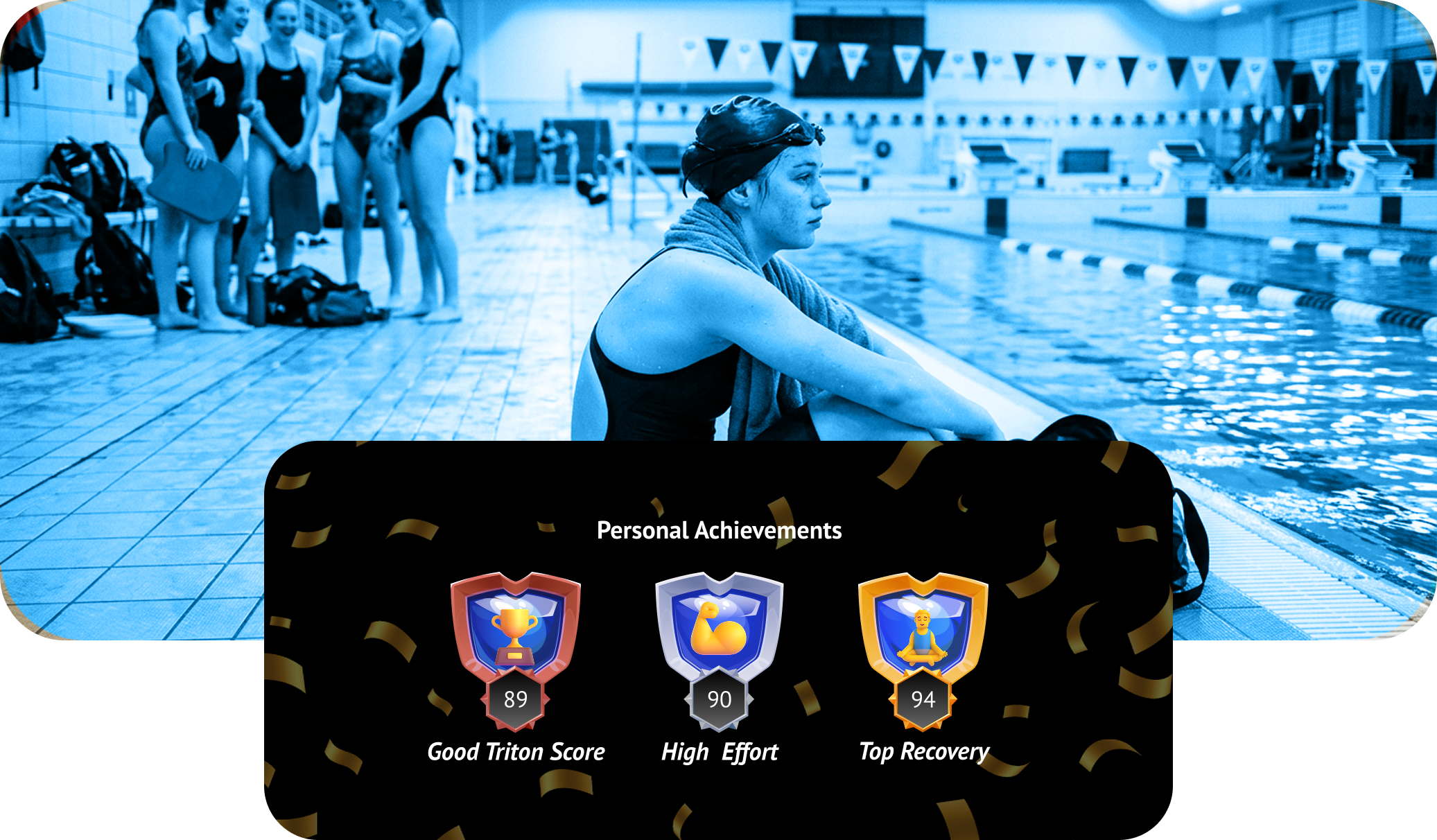
Every coach knows this swimmer.
At nine years old, they sprint onto deck with one goggle strap half on, talking too loud, vibrating with energy, turning warm-up into a race before practice has even started. They do not know what a training block is. They do not care about lactate, pacing models, or long-term progression curves. They care that their friends are there. They care that swimming feels exciting. They care that today might hold a relay, a laugh, or one small moment that makes them feel proud.
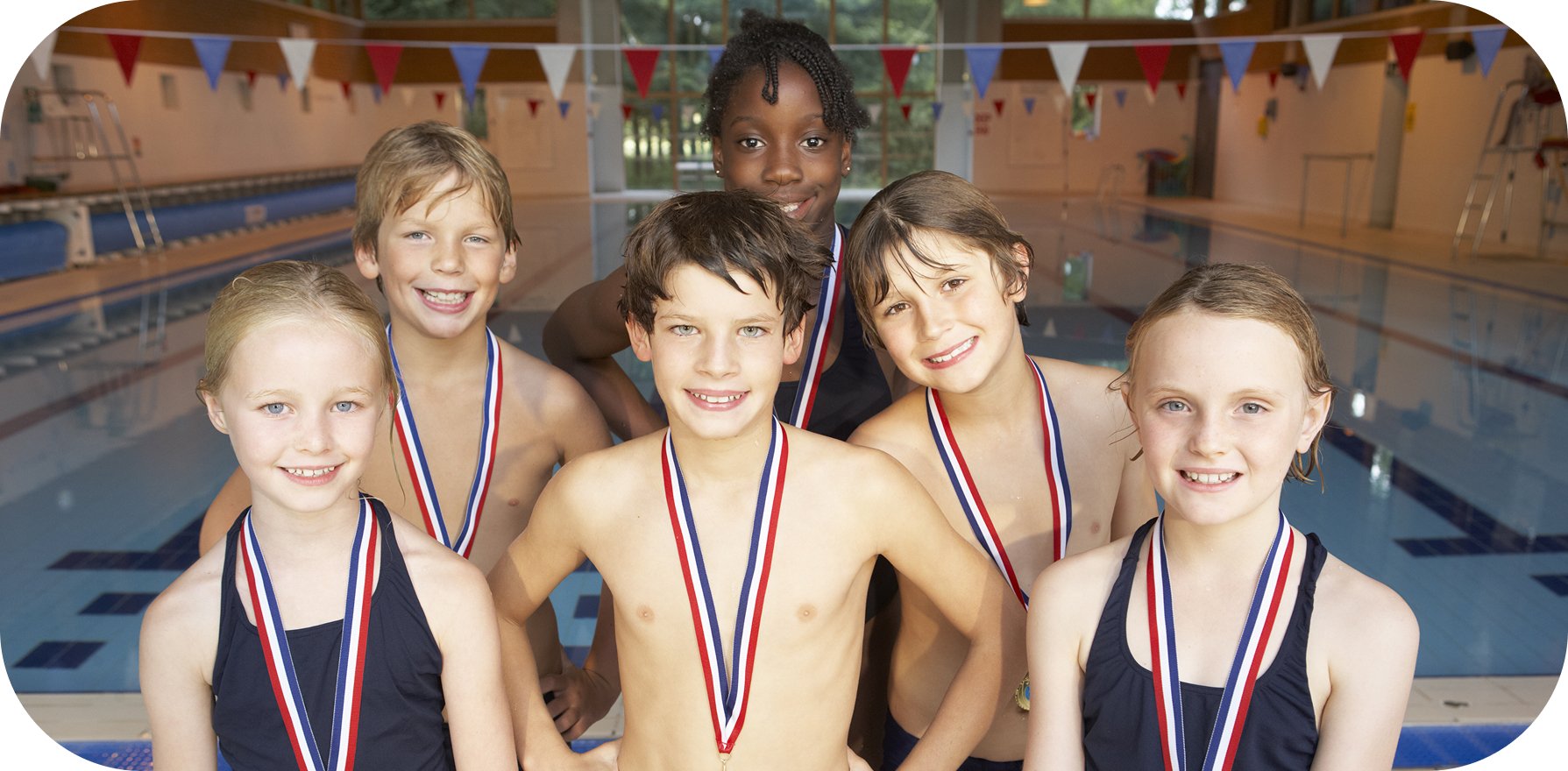
Then the years pass.
The practices get earlier. The sets get longer. The standards get higher. Improvement starts to matter more, but also becomes harder to see. The sport asks for more discipline, while the rewards move further away. The swimmer who used to run into the pool starts walking. Then dragging. Then negotiating with themselves in the parking lot.
Sometimes they stay. Sometimes they do not.
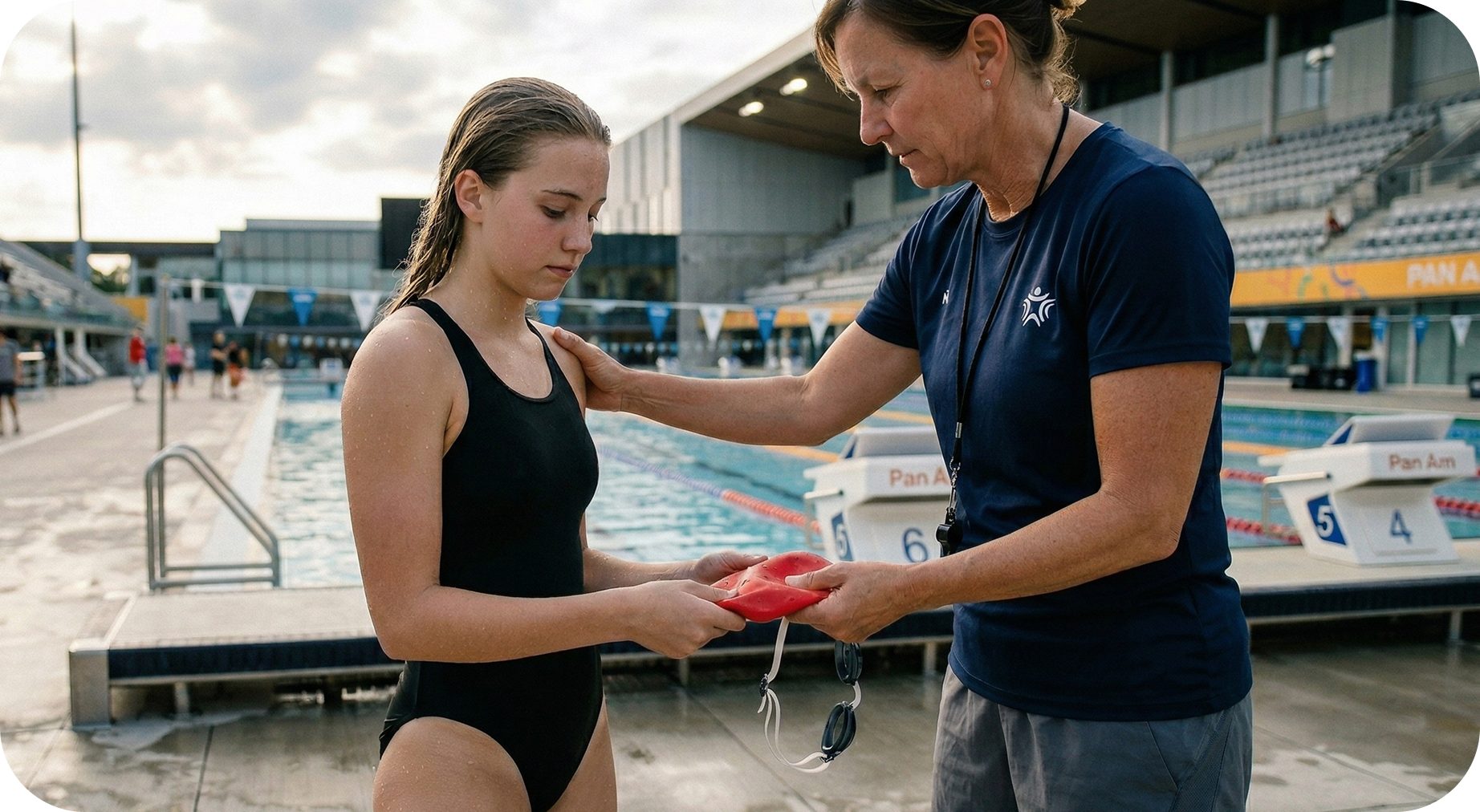
That is not just a coaching feeling. Research across youth sports shows a real retention problem, and the reasons are painfully familiar. Kids start because sports are fun. Many leave when that fun disappears. In swimming specifically, dropout research points to lack of enjoyment, boredom, pressure, and strained relationships with adults as recurring reasons swimmers walk away.
That is what makes swimming such a beautiful sport, and such a dangerous one.
Swimming is built on delayed gratification. A basketball player gets the scoreboard. A baseball player gets a hit. A soccer player hears the crowd. A swimmer might spend six weeks improving underwaters, pacing discipline, turn speed, breath control, and stroke efficiency before the stopwatch finally tells the truth. Coaches understand that. Older athletes sometimes learn to love that. But younger swimmers, and plenty of older ones too, live in a simpler emotional reality: Did this feel worth it today?
If too many practices answer that question with silence, the sport starts losing them long before anyone says the word burnout.
When the spark starts to fade
The dropout story in swimming is rarely dramatic. It is usually quiet.
It is the swimmer who still comes to practice, but no longer races to the front of the lane. The swimmer who used to ask questions and now just nods. The swimmer whose times are not terrible, whose attendance is not awful, whose attitude is not openly bad, but whose spark has gone missing.
That matters, because what looks like laziness from a distance is often something more fragile: the feeling that effort is no longer emotionally connected to reward.
Research on youth sport experience helps explain why. Strong youth sport environments tend to share a few core traits: fun and enjoyment, visible skill development and progress, social support and belonging, and clear communication. That is a powerful reminder for swim coaches, swimmers, and parents alike. Fun is not the opposite of development. Fun is one of the conditions that makes development sustainable.

Why fun is a performance issue
In serious programs, the word fun can make some people nervous. It can sound soft. It can sound like lowering the standard. It can sound like entertainment when what coaches want is excellence.
But the research points in a different direction.
The strongest case for gamification is not that it magically makes athletes faster. The stronger case is that it improves the upstream drivers of performance: engagement, adherence, self-monitoring, enjoyment, feedback use, and follow-through. Studies on gamification and physical activity have found positive effects on motivation and participation, especially when the system is designed well.
That is the point coaches should care about.
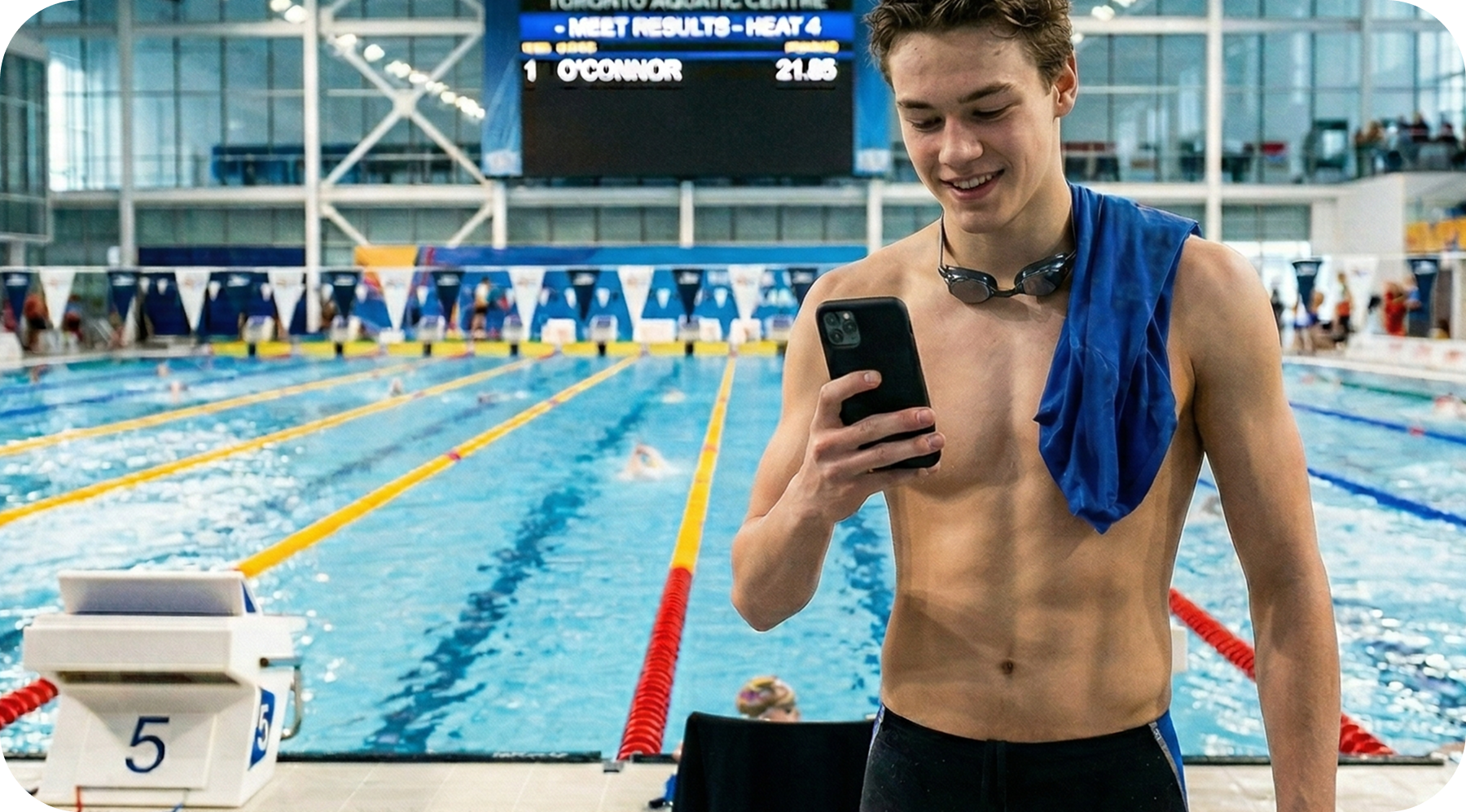
Swimmers do not improve because a badge appears on a screen.
They improve because they stay engaged long enough to stack meaningful days. Because they notice progress sooner. Because effort feels visible. Because the process starts giving something back before the championship meet arrives.
That is where gamification becomes more than a gimmick. It becomes a coaching tool.

The psychology is simple, even if the training is not
Self-Determination Theory gives coaches a useful lens for understanding why this works. The framework centers on three basic psychological needs: autonomy, competence, and relatedness. In plain language, athletes stay engaged when they feel some ownership, when they can tell they are improving, and when they feel connected to the people around them.
A swimmer needs competence: I am getting better.
A swimmer needs autonomy: I understand what I am working on and why it matters.
A swimmer needs relatedness: I belong here. I am part of this team. This effort means something to the people around me.
The best coaching environments support all three. The best gamification systems do too.
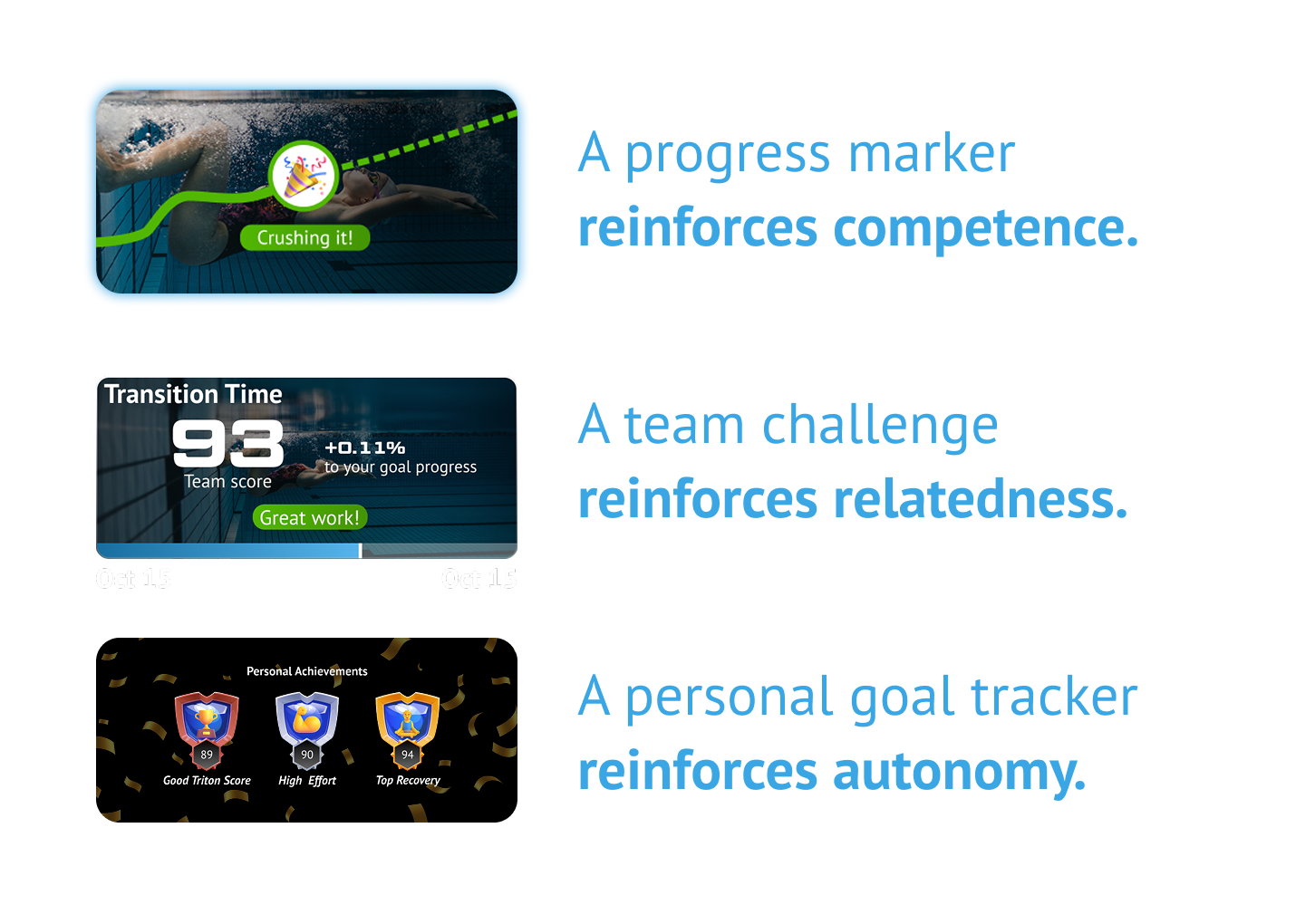
Suddenly, the sport starts talking back.
The leaderboard mistake that loses half your team
This is where coaches need nuance.
Leaderboards can be incredibly motivating. They can also be incredibly damaging.
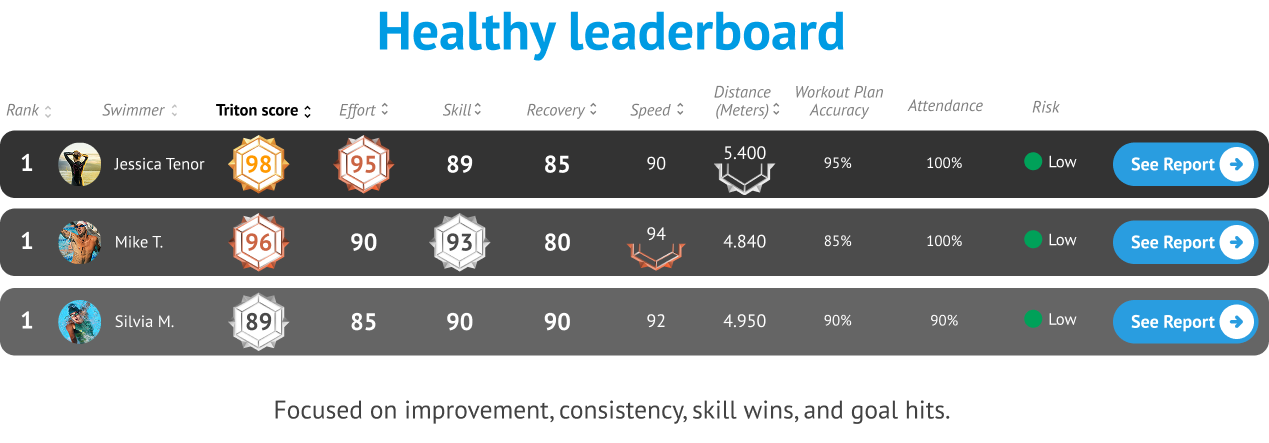
A bad leaderboard is just a public reminder that the same three swimmers are always winning. It flatters the already talented, quietly demoralizes the rest, and teaches a team to confuse ability with value.
A better leaderboard answers a very different question.
Not Who is best?
But Who improved today?
Who executed the skill?
Who hit the target?
Who stayed consistent?
Who brought the right effort?
Who moved the team forward?
That distinction matters because competition works best when it feels attainable and structured. The strongest gamified systems do not trap athletes in a permanent hierarchy. They use resets, layers of progress, and multiple ways to succeed. In youth sport especially, mastery-oriented environments consistently outperform ego-driven ones when the goal is long-term development, confidence, and retention.
So the lesson for swimming is not that leaderboards are bad.
It is that permanent public hierarchies are.
The healthiest systems make recognition feel possible for more athletes, more often, for better reasons.
Swimming is full of wins nobody sees
This is where swimming has a huge opportunity.
The sport is overflowing with meaningful victories that disappear unless a coach deliberately surfaces them.
A swimmer can improve push-off depth. They can hold stroke length deeper into fatigue. They can breathe better inside the race model. They can stay in the right training zone. They can hit the technical focus of the day. They can recover better between reps. They can become more consistent from repeat to repeat.
Those wins matter enormously.
But most swimmers do not feel them unless someone makes them visible.
That is why immediate, meaningful feedback matters so much in swimming. Done well, it helps swimmers connect the invisible parts of improvement to something they can actually feel at the end of practice.
For coaches who want to make those training signals more usable, How to Use Training Zones in Swim Practice (Without Overcomplicating It) and How to Fine-Tune Swim Training Using Data (Without Overthinking It) are helpful reads. Both focus on turning feedback into something coaches can actually use on deck.
The future of better coaching is not more raw data dumped on athletes.
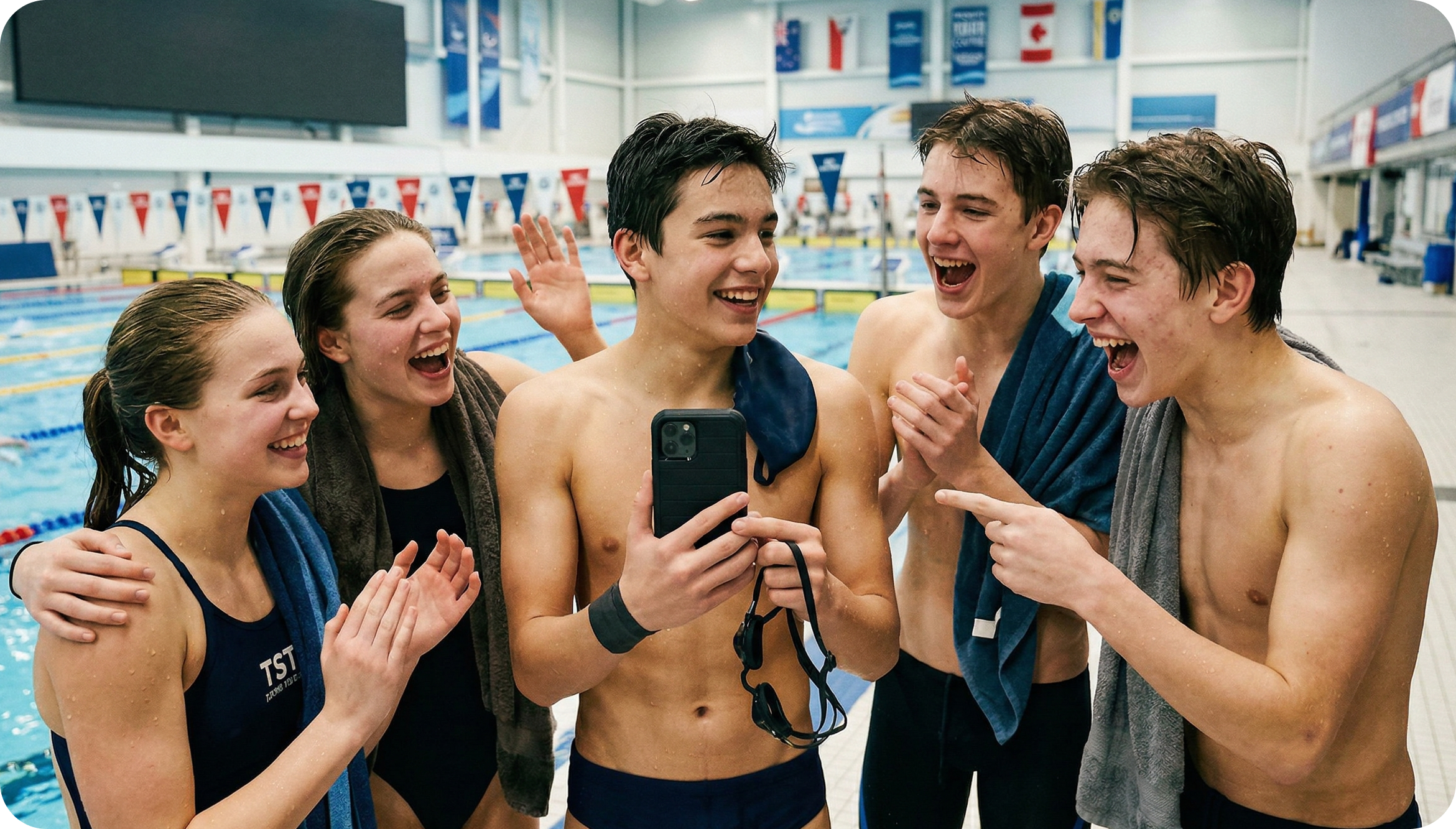
It is better emotional packaging of the right data.
Data that tells a swimmer, that rep counted.
Data that tells a parent, progress is happening even before the meet time drops.
Data that tells a coach, this is working, keep going.
What it looks like when coaches get this right
The coaches who keep swimmers in the sport longest usually do something subtle but powerful: they make progress impossible to miss.
They celebrate improvements before they become medals.
They reward behaviors before outcomes.
They turn the end of practice into a moment of meaning, not just exhaustion.
That is why thoughtful gamification makes so much sense in swimming. Not because coaches need to make the sport silly, but because swimmers need more proof that the work is going somewhere.
Young swimmers do not need a lecture in sports science at the end of every session. They need a reason to care about tomorrow's practice.
Where this becomes real for swim teams
This is where the story moves from theory to application.
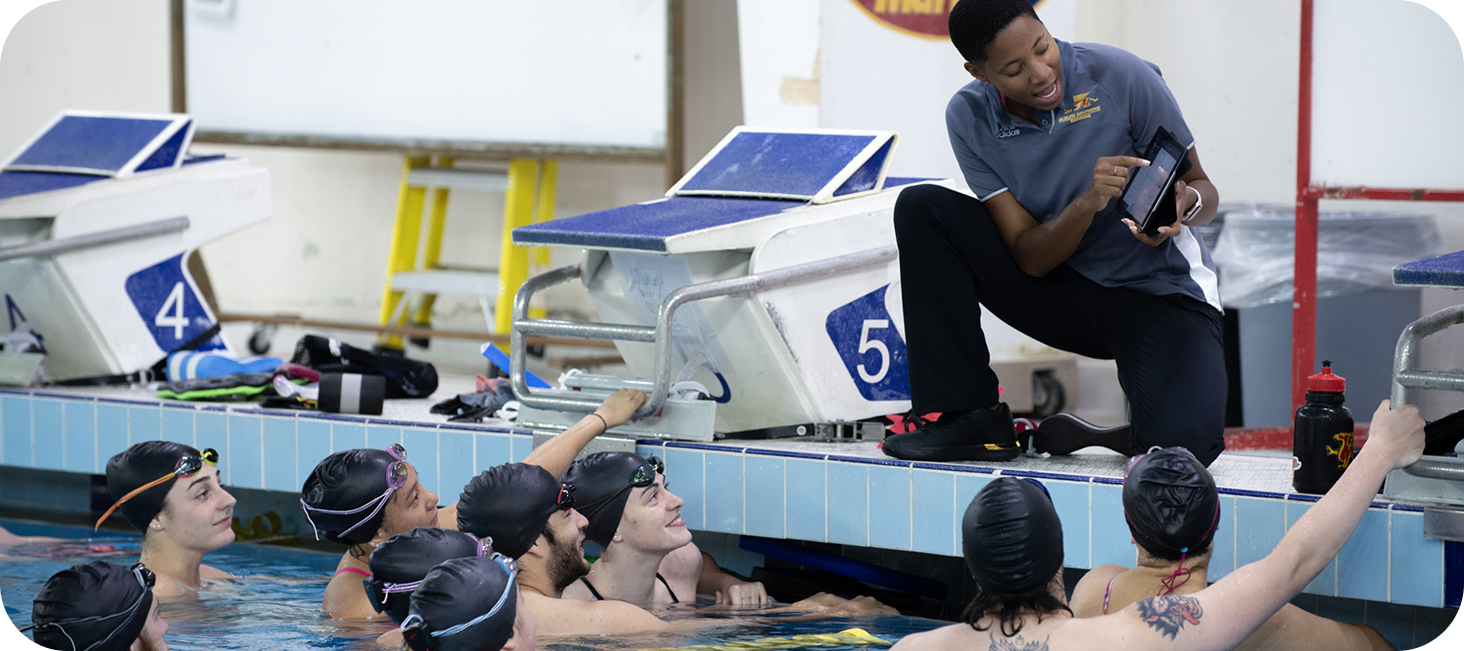
Once a coach accepts the research, the next question becomes obvious: how do we actually do this consistently? How do we make progress visible after every workout without asking coaches to build a motivation system by hand on the pool deck?
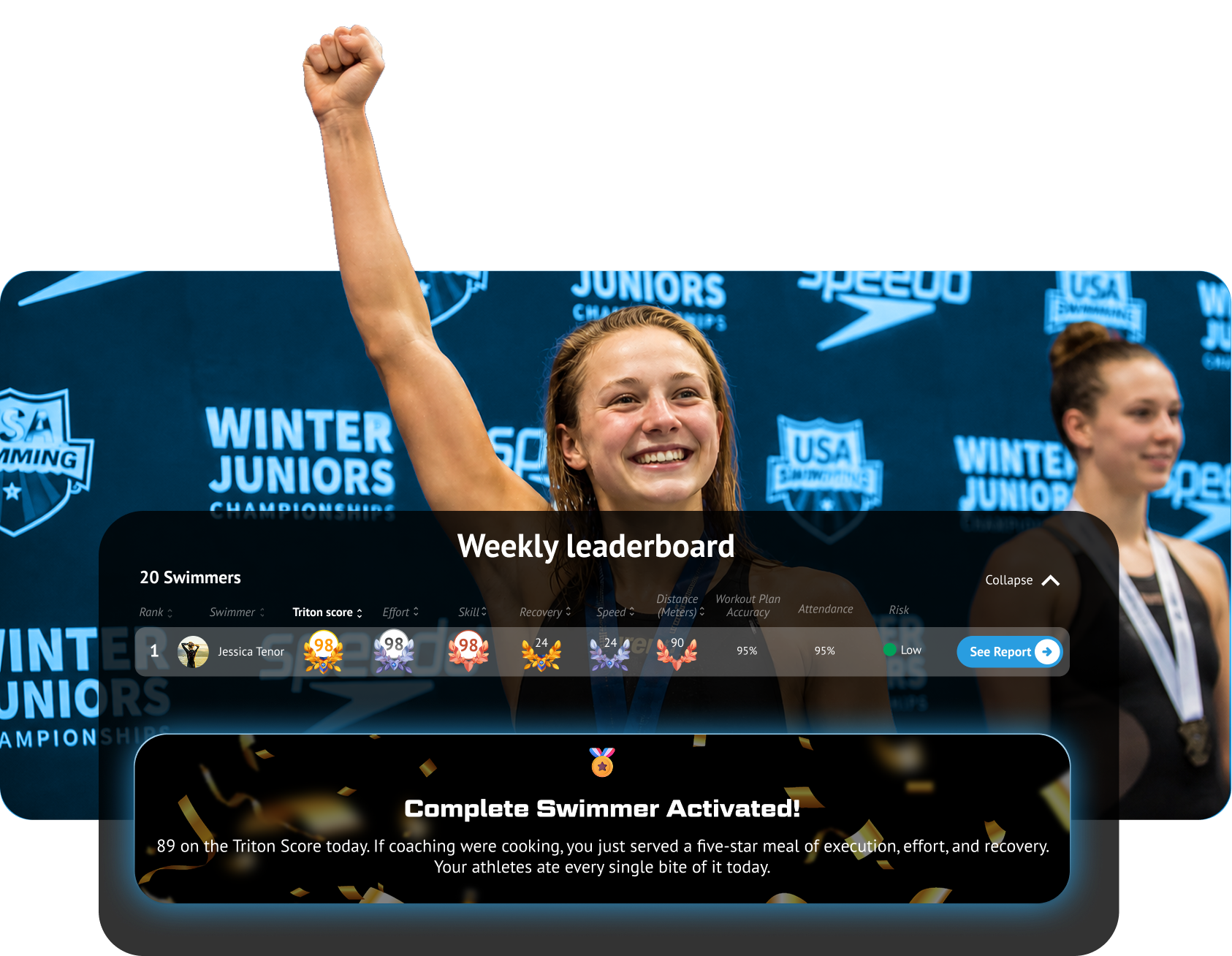
That is where TritonWear's new post-workout leaderboards and gamification tools fit naturally into the coaching story.
The most compelling part of the feature design is that it does not appear to be built around glorifying the fastest swimmer. Instead, it is built around making daily progress visible. The research materials describe a leaderboard framed around performance relative to a swimmer's own baseline, not just absolute speed. They also describe bronze, silver, and gold style ratings, badges, and rising stars so that more athletes can experience a meaningful win on a given day. In other words, the system is designed to reward effort, execution, and improvement, which is exactly the direction the research suggests is safer and more motivating for youth sport.
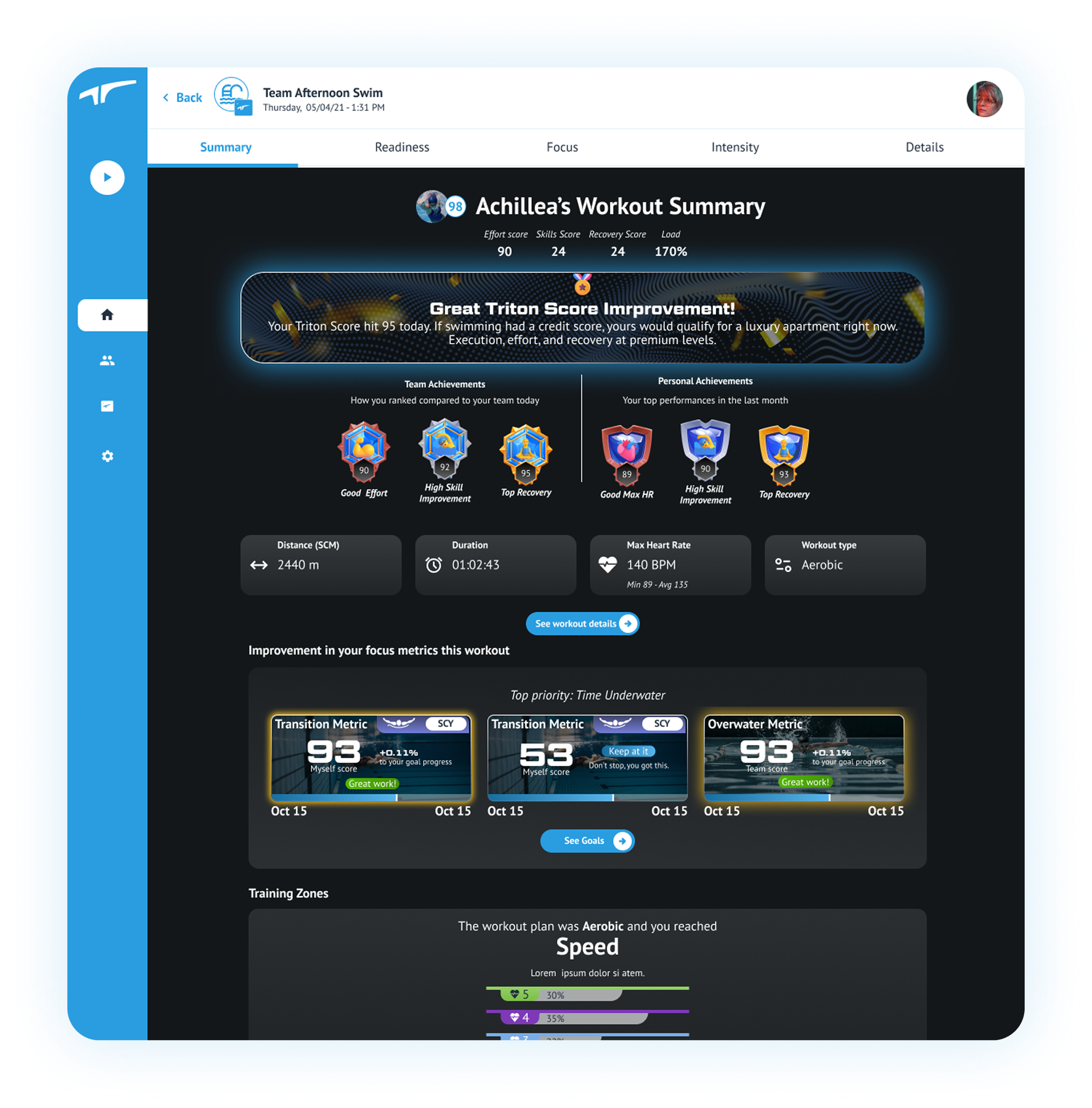
That matters because it supports the three things swimmers need most.
It supports competence by helping them see improvement.
It supports relatedness by giving the team something to celebrate together.
It supports autonomy by showing them what they are working toward and what good looked like today.
And maybe most importantly, it gives the end of practice a better emotional ending.
Instead of leaving with only fatigue, swimmers leave with feedback.
Instead of leaving with only effort, they leave with recognition.
Instead of wondering whether the practice mattered, they can see that it did.
For coaches who want to see how that philosophy shows up in practice, Turning Progress into Motivation: Meet the TritonWear Leaderboard, Getting The Most Out of Your Weekly Reports, and Best Practices for Leveraging Data After Practice offer a useful next step.
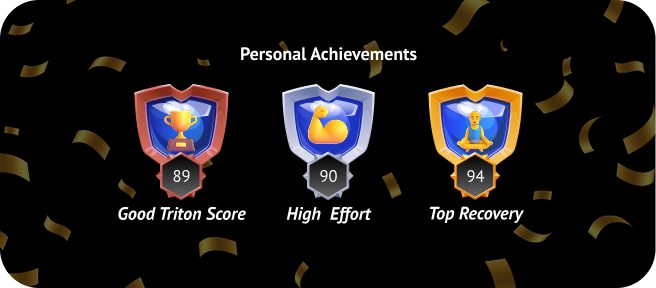
For parents, that shift matters too. One quiet frustration in swimming is that families often judge progress almost entirely through meet results. A healthier feedback system gives parents a better conversation. Not only Did she drop time? but What did she improve this week? That protects confidence in the middle of a long season, especially for athletes whose process is improving before the race result catches up.
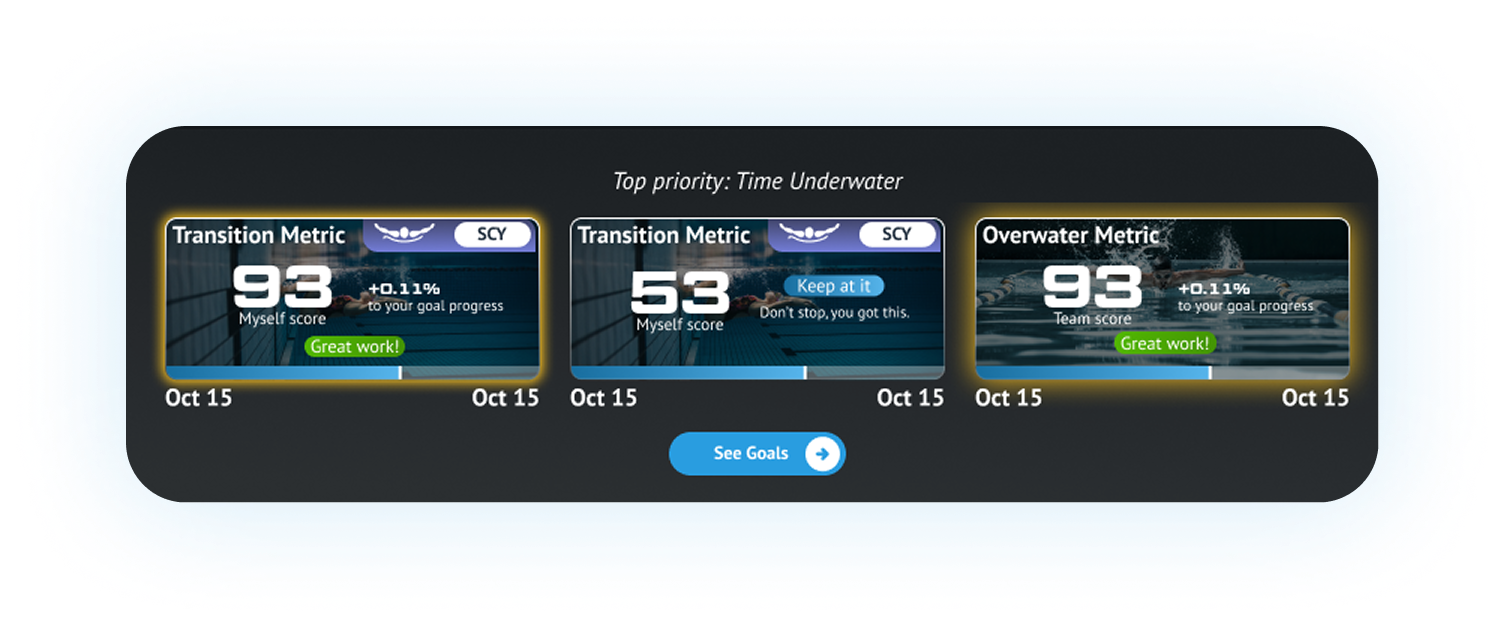
The best teams do not just train hard. They make hard work feel meaningful.
That may be the most important takeaway in all of this.
Swimming should stay hard. The discipline is part of what makes the sport special. The black line teaches patience, resilience, and the ability to keep believing before the rewards arrive.
But if too many practices feel joyless, invisible, and emotionally flat, the sport starts asking young athletes for a kind of maturity they do not yet have.
Great coaches bridge that gap.
They do not water the sport down.
They make the work easier to love.
That is why gamification and well-designed leaderboards deserve to be taken seriously. Not because they make swimming less demanding. Because they make demand feel more rewarding. They help athletes see themselves improving. They help teams celebrate the right things. They help parents understand progress more clearly. They help coaches keep more swimmers emotionally connected to the process.
In a sport fighting burnout, boredom, and dropout, that is not a side benefit.
That is the work.
Because swimmers rarely leave all at once.
Usually, they leave in pieces.
A little joy first.
Then a little belief.
Then a little energy.
Then eventually, the sport itself.
The coaches who change that story are the ones who make sure swimmers do not just work hard.
They make sure swimmers can still feel why it matters.